
You’ve had a flawless finish for months, then a tight car park, a bit of road debris, or a careless door leaves a scuff, a tear, or a lifting edge. The first worry is usually cost, and the fear that one damaged patch means stripping and re-wrapping the whole car.
Usually it doesn’t. A damaged section of wrap can normally be replaced without redoing the rest of the car, because vinyl is fitted panel by panel. Done properly, the repair is hard to spot. Done badly, it looks worse than the damage did. If you’d like the basics first, we explain what a vehicle wrap actually is in a separate guide.
Why It’s Usually One Panel, Not the Whole Car

A wrap is fitted in sections: a door, a wing, a bonnet, a bumper. That means we can often remove the film from the damaged panel only and fit a fresh sheet in its place, leaving the rest of the car alone.
Paint doesn’t work like this. Respraying one panel can leave a visible halo or a texture mismatch against the panels next to it. Vinyl is more forgiving, as long as the new film is cut, fitted, and finished properly and the colour matches the rest of the car.
What Kinds of Wrap Damage Can Be Repaired?
Not every problem needs the same fix. These are the ones we see most:
- Surface scuffs and scratches. Light marks on the top layer sometimes polish out. Deeper ones usually mean replacing the panel’s film.
- Tears and cuts. Caused by road debris, a scrape, or a sharp edge. These need a new section, because a torn piece can’t be glued back.
- Lifting edges. Often caused by water, dirt, or heat getting under the edge. Caught early, an edge can sometimes be re-secured. Once dirt is underneath, the panel usually needs redoing.
- Bubbles. A single small bubble can sometimes be released. A cluster usually points to trapped gas, moisture, or poor adhesion, and needs a proper look.
- Staining or fading in one area. If a panel has aged faster than the rest, replacing it can even things up, though matching is covered below.
How We Assess the Damage
Before any film comes off, we look at what’s underneath as well as what’s on top. If the impact reached the paint, or the metal or plastic below it, that has to be put right first. Vinyl highlights imperfections underneath rather than hiding them.
That’s why we check for the same things we’d check on a new wrap. Stone chips and deeper abrasions need levelling. Healthy paint doesn’t need sanding, but a damaged area might, and our guide on whether you have to sand a car before wrapping it explains when. If there’s any sign of corrosion, it has to be dealt with before new film goes on, as we explain in our guide to wrapping a car with rust.
Will the New Section Match the Rest of the Wrap?
This is the question we get most. Vinyl changes slightly over time, thanks to UV exposure, weather, and how the car’s been cleaned. A brand new panel next to a two-year-old one can look a touch fresher.
Three things make a good match easier:
- Knowing the film. If you still have the brand, colour name, and code from the original wrap, tell us. Where we can, we source the same film.
- How well the wrap’s been looked after. A wrap that’s been cleaned properly keeps its colour better, which makes matching simpler. Our guide to cleaning a wrapped vehicle covers the routine.
- The finish. Gloss, satin, matte, and textured films each age a little differently, so we’ll tell you honestly what to expect.
If the wrap is several years old, a replaced panel may be slightly noticeable against the rest. We’d rather say so before we start than have you find out afterwards. Choosing a colour that suits you long term also helps with future repairs, which is covered in our guide to choosing the best colours for your vehicle wrap.
Why a Patch Rarely Works
It’s tempting to cover a tear or a hole with a small patch of vinyl. In practice, that creates an edge in the middle of a panel, and edges are where wraps lift. Wind at speed, a pressure washer, or even a drying cloth can catch it.
A proper repair replaces the film across the whole affected panel, with the new edges tucked behind trim or panel gaps, the same as the original fit. It takes longer than a patch, but it’s the version that stays down.
What Happens During a Panel Replacement
The process follows the same steps each time:
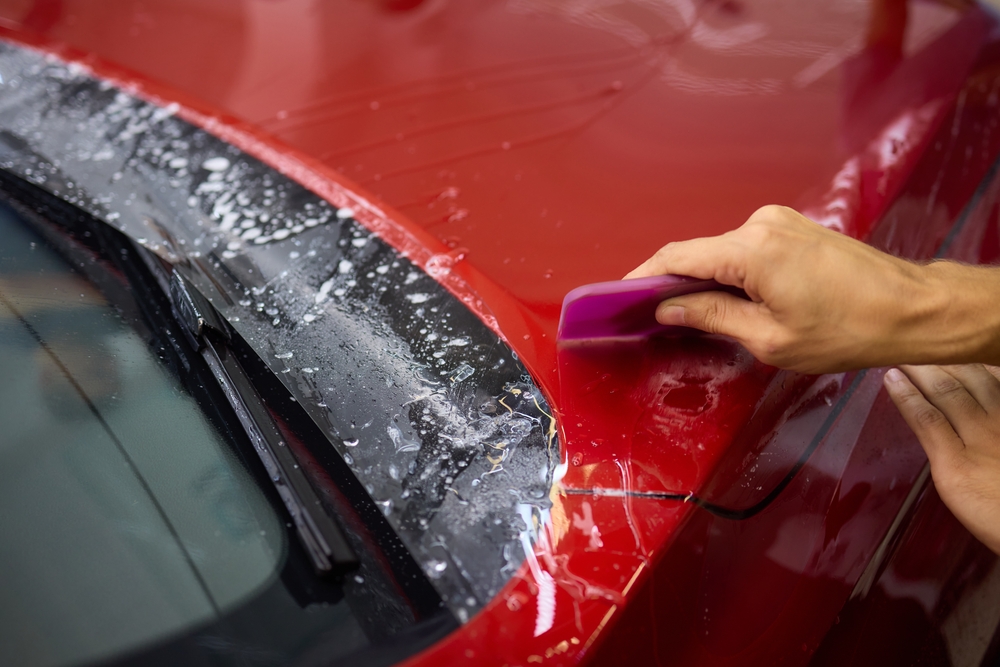
- Careful removal. We soften the adhesive with controlled heat and peel the damaged film back, without using blades on your paintwork.
- Surface cleaning. All old adhesive, wax, and contamination come off, so the new film bonds properly.
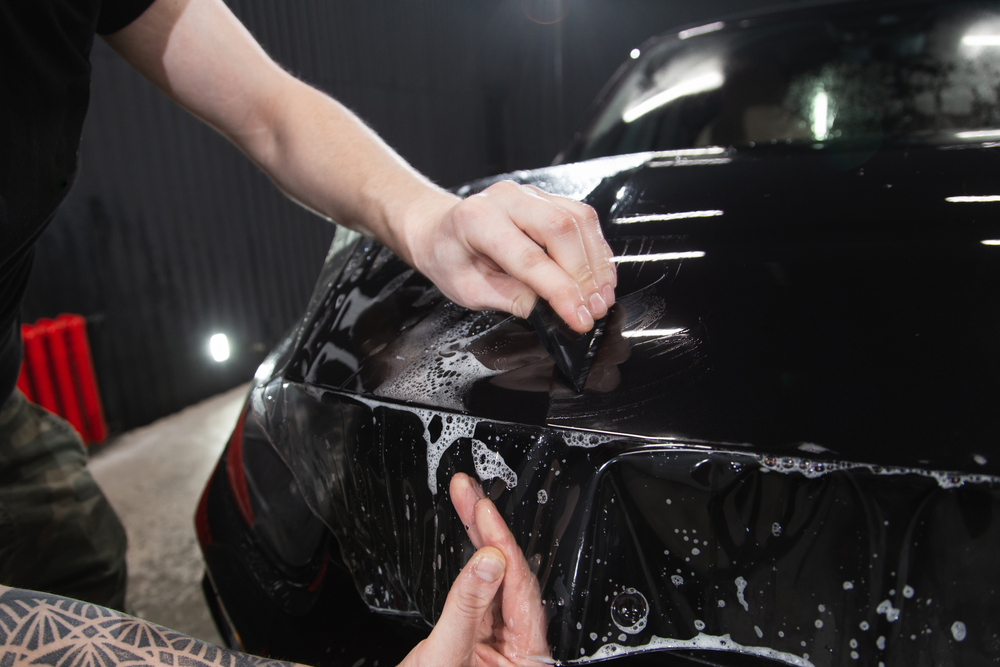
- Fitting the new film. We apply a fresh sheet to the panel, aligning grain or metallic flake with the neighbouring panels.
- Post-heating. Heating the film into recesses and edges sets the adhesive and helps stop future lifting.
Any dust or dirt trapped under new vinyl will eventually show as a bubble or a lifted edge, so this is done in a clean workshop, not a driveway.
Will Replacing a Section Damage My Paint?
When the film is removed properly, it shouldn’t. A wrap often acts as a sacrificial layer, taking the scratch or scuff instead of the clear coat below. Our guide on whether a wrap ruins paint goes through this in more detail.
There are two situations that need extra care. If the paint wasn’t in good condition before the wrap went on, removal can lift weak paint along with the film. And plastic parts, like bumpers and exterior trim, hold adhesive differently to metal, so we take more time over those. Our guide on removing a vehicle wrap covers what to expect more generally.
What Does Wrap Repair Cost?
We can’t give a fair figure without seeing the car. What we can tell you is what moves the price:
- Size and shape of the panel. A flat door is quicker than a bumper full of curves.
- How many panels are damaged. One panel is usually a small part of the cost of a full re-wrap. As more panels need doing, the gap narrows.
- The film. Some colours and finishes cost more than others, and some are harder to source.
- Damage underneath. Any repair to the paint or bodywork adds to the job.
Replacing one panel is generally more affordable than a full wrap, and quicker too. For the bigger picture, see our guide to how much a full vehicle wrap costs.
When a Full Re-Wrap Makes More Sense
Sometimes replacing a panel isn’t the best answer:
- The wrap is near the end of its life and a new panel would stand out.
- Several panels are damaged, lifting, or faded at the same time.
- The original film is discontinued and can’t be matched closely.
- You fancy a change anyway.
Our guide to how long a vehicle wrap lasts helps you decide whether to patch up or refresh. We’ll give you our honest view when we see the car.
Protecting the Wrap Once It’s Repaired
Once the panel’s sorted, it’s worth thinking about what caused the damage. High-impact areas, such as the front bumper, bonnet, and wing edges, can be protected with paint protection film fitted over the top. It won’t make the wrap indestructible, but it adds a layer that helps deflect the debris that causes most chips and scuffs.
Whatever happened, deal with damage early. A small tear or lifting edge can let moisture under the film, and that can affect the adhesive on the rest of the panel.
Common Questions
Can You Replace Just One Panel of a Wrap? Usually, yes. Because wraps are fitted panel by panel, we can often remove and replace the film on a single panel without redoing the rest of the car.
Will the Repaired Panel Look Different? It can, especially on an older wrap. We’ll source the same film where we can and tell you honestly how close the match is likely to be before we start.
Can You Just Patch a Small Tear? We don’t recommend it. A patch creates an edge in the middle of a panel, and that’s where lifting starts. Replacing the whole panel’s film is a more lasting fix.
Should I Tell My Insurer About Wrap Damage? It’s worth checking your policy, especially if the damage came from an accident. Our guide on how wrapping affects insurance is a good starting point.
Book an Inspection
The best first step is for us to look at the damage in person, so we can tell you whether it’s a one-panel job. Get in touch and we’ll arrange it. We’re based in Rochdale and also cover Oldham, Bury, and Huddersfield.